

How Artificial Intelligence Is Transforming Modern Education
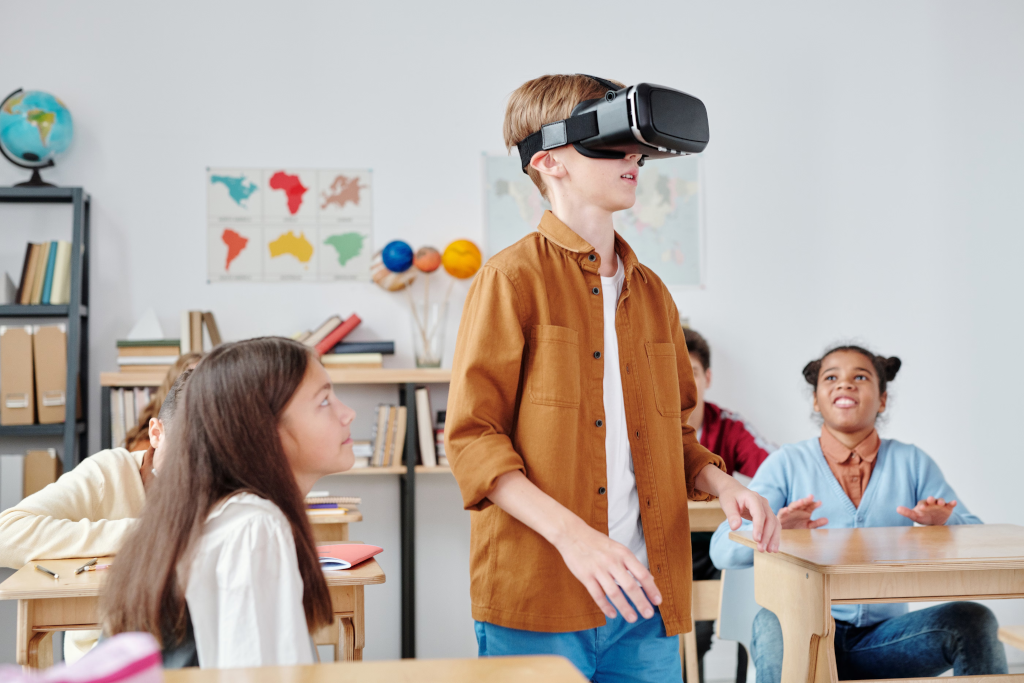 Image Credit: Pexels
Artificial intelligence is quickly moving from science fiction into our daily lives, and education is no different, especially when we think about how to create a productive work environment for employees. AI isn't just some far-off idea for the classroom; it's a powerful tool that's already starting to change how students learn and how teachers teach. From making learning experiences just for you to handling everyday office tasks, AI is set to reshape education for years to come.
Personalised Paths for Every Learner
One of the biggest things AI promises in education is truly personalised learning. Regular classrooms often use a one-size-fits-all approach, expecting every student to learn at the same speed. AI changes this by adjusting to what each person needs, what they're good at, and where they struggle.
Imagine a maths program that notices when a student is having trouble with a certain idea. Instead of just moving on, the AI can offer more practice, helpful videos, or different ways to look at the problem until the student gets it. On the flip side, if a student is doing really well, the system can introduce harder topics to keep them interested and challenged. This kind of learning makes sure no one falls behind or gets held back.
Developing the Next Generation of AI Leaders
As AI becomes a bigger part of society, more and more people are needed to design, build, and ethically manage these systems. Education isn't just being changed by AI; it's also responsible for creating the experts who will lead its future. This means we need a new focus on advanced digital skills and computational thinking in school.
For those who want to lead in this exciting field, getting a specialised higher education is becoming crucial. A program like a Master of Artificial Intelligence gives you the deep technical know-how and strategic understanding needed to create the next generation of educational tools and other AI-powered solutions. These leaders will be the ones making sure AI technology is developed and used in a way that's effective, fair, and good for everyone.
AI as a Tutor and Teaching Assistant
AI can be an endless helper for both students and teachers. For students, AI tutors offer support around the clock. If a student is stuck on homework late at night, an AI tutor can give instant feedback and guidance. These systems can bridge academic gaps by giving step-by-step explanations and practice problems made just for that student.
For teachers, AI can really cut down on administrative work. It can automatically grade multiple-choice tests and even give feedback on written assignments, freeing up valuable time. This lets teachers focus on what they do best: guiding students, leading discussions, and creating engaging lessons. AI tools can also help teachers look at student performance data to spot trends across the class and areas where the curriculum might need tweaking.
Preparing for an AI-Driven Workforce
The skills needed for future jobs are different from those in the past. As AI takes over routine tasks, human skills like critical thinking, creativity, teamwork, and solving complex problems become even more important. Education needs to change to build these abilities.
Putting AI into the curriculum does more than just get future AI experts ready; it helps all students understand AI. Knowing how to use AI as a tool for research, analysis, and creation will be a basic skill in almost every industry. Schools and universities are starting to include projects where students work with AI, teaching them to ask the right questions and carefully evaluate what these powerful systems produce.
Ethical Considerations in AI Education
Bringing AI into education isn't without its problems. One of the biggest worries is data privacy. Educational AI systems collect a lot of information about how students perform and behave, and this data must be protected and used responsibly.
Another big thing to think about is algorithmic bias. If an AI learns from biased data, it can make existing inequalities in the classroom worse. For example, a system might unfairly penalise students from certain backgrounds based on patterns in the data it was trained on. Developers and educators must work together to make sure AI tools are fair, clear, and equal for all learners. Dealing with the digital divide is also key, since not all students have the same access to the technology needed to benefit from AI learning.
AI has huge potential to make education better, more accessible, and more engaging. By using it wisely and tackling its challenges head-on, we can help both students and teachers succeed in a world that's becoming more and more digital.
839GYLCCC1992
Leave a Reply