

How to Read a CBD Label Without Being Sold To
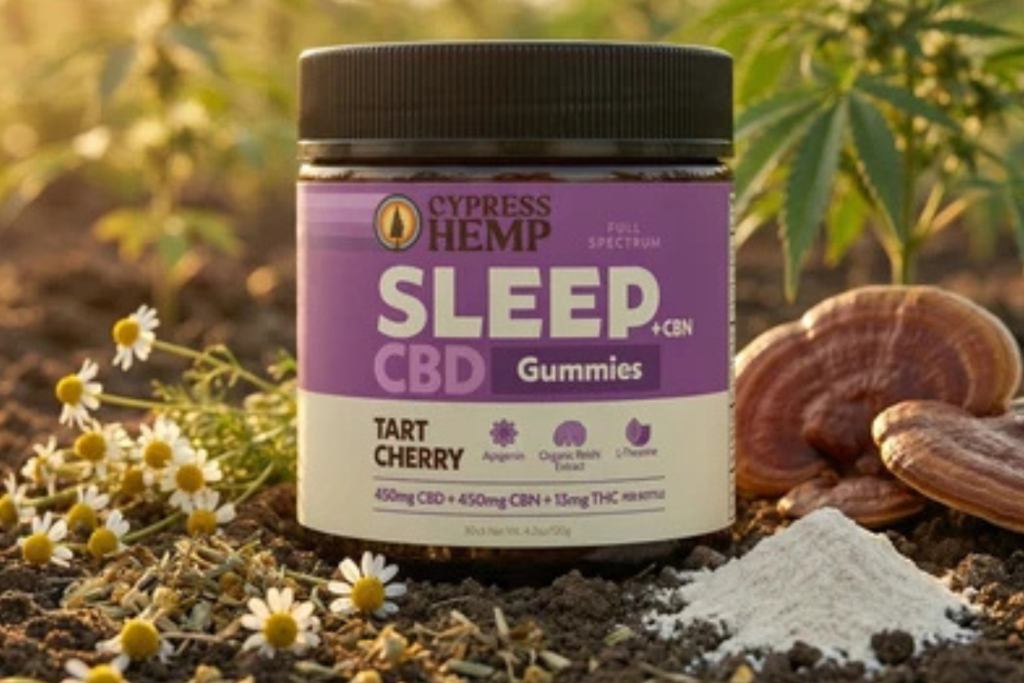 [Image from Cypress Hemp].
The CBD aisle is one of the few places where the packaging tells you almost nothing useful. A big milligram number, some botanical illustration, and a few words that sound like claims without technically being any.
Meanwhile, the information that would actually help you sits in a document most shoppers never open. Here's how to read this category properly, in the order the questions matter.
1. Work Out Which Type You're Holding
There are three product types, and the differences are real, not marketing.
- Full Spectrum: Keeps everything the hemp plant produces, including trace THC. Under federal law, hemp is capped at 0.3% delta-9 THC by dry weight, which isn't enough to intoxicate but isn't zero either.
- Broad Spectrum: Keeps the other cannabinoids and terpenes but has the THC removed, so it should test at 0.0%.
- Isolate: A cannabidiol on its own, typically around 99% by weight, with nothing else.
This is the first decision because it drives everything after it, including whether the product is safe for you if you're drug tested at work.
2. Find the Milligrams Per Serving, Not Per Bottle
A “1,800mg” bottle sounds strong. Divide it by the number of servings, and you may find each dose is reasonable, or that the bottle simply contains more liquid than a competitor's.
Per-serving is the only number that lets you compare two products. Brands know this, which is why the bottle figure is usually the one in large type.
3. Open the Certificate of Analysis
This is the step that separates informed buyers from hopeful ones, and it takes about ninety seconds.
A certificate of analysis, or COA, is an independent lab's report on a specific batch. Reputable brands publish them and link them from the product page. Here's what to look at:
- Does the batch number match your bottle? A generic report from two years ago tells you nothing about what you're holding.
- Does the CBD figure match the label? This is the whole point of checking.
- What does the THC line say? On a full spectrum product, it should show THC present but under 0.3%. On a broad spectrum product, it should read 0.0% or none detected. If a “broad spectrum” product shows THC, it's mislabelled.
- Are the other cannabinoids listed? Seeing CBG, CBC, CBN, or CBDv confirms you're getting the fuller profile you paid for rather than something closer to isolate.
- Is there a contaminant panel? Good reports test for pesticides, heavy metals, and residual solvents. Hemp is a bioaccumulator, meaning it draws material out of the soil it grows in, so where and how it was farmed genuinely matters.
Why does any of this need saying? Because when researchers bought 84 CBD products online and tested them, only about 30% contained CBD within 10% of the amount claimed on the label (Bonn-Miller et al., 2017, JAMA).
That study is a few years old, and the market has improved, but federal supplement rules still haven't caught up with the category, which is exactly why the lab report carries the weight the packaging can't.
For a sense of what good practice looks like, check out Cypress Hemp, which publishes a batch report for every product it sells and grows its hemp organically, which is the combination worth looking for: independent testing you can check, plus a farming approach that reduces what ends up in the extract in the first place.
4. Read the Rest of the Ingredients
The extract is one ingredient. What it's carried in, is another.
Most CBD oils use MCT oil from coconut, which is neutral and cheap. Some use hemp seed or hemp heart oil, which brings its own omega-3 and omega-6 content. Some products layer in adaptogens like ashwagandha, functional mushrooms such as lion's mane or reishi, which are the culinary kind rather than anything psychedelic, or amino acids like L-theanine.
For edibles, check where the color comes from. Fruit juice and spice extracts cost more than synthetic dye, and the choice is a decent proxy for how carefully the rest was made.
5. Ignore Anything That Sounds Like a Promise
This is a regulated category, and the rules are not subtle. Hemp products are not approved to diagnose, treat, cure, or prevent anything. Any brand telling you their product treats a named condition is either uninformed or hoping you are.
Honest language in this space hedges: “may support”, “commonly used for”, “some people find”. Research into cannabinoids is still early, largely based on small studies and lab models rather than large clinical trials. A brand that says so is more trustworthy than one that doesn't.
6. Check Two Practical Things Before You Buy
Drug Testing
Standard workplace screens look for a THC metabolite, not CBD. Full spectrum products contain trace THC, and it can accumulate with daily use. If you're tested, choose broad-spectrum or isolate, and understand that no hemp product can promise a particular result.
Your State
Hemp is federally legal under the 0.3% rule, but state laws vary widely and change quickly. Check your own state's current position before ordering rather than assuming.
Final Thoughts
A CBD label becomes much easier to read once you know which information deserves your attention. Start with the type of extract, then look at the amount per serving rather than the biggest number on the bottle. From there, open the batch report and check whether the CBD and THC results match what the packaging claims.
The rest is largely a question of transparency. You should be able to see what else is in the formula, find current testing for the product you are buying, and understand what a company can and cannot reasonably claim.
Spend five minutes checking those details before you buy. They will tell you considerably more about a CBD product than anything printed in large type on the front of the bottle.
References
- Bonn-Miller, M. O., Loflin, M. J. E., Thomas, B. F., Marcu, J. P., Hyke, T., & Vandrey, R. (2017). Labeling accuracy of cannabidiol extracts sold online. JAMA, 318(17), 1708-1709.
839GYLCCC1992
Leave a Reply