

How Do Professional Lenticular Printing Services Handle Complex Projects?

Large-format visual displays are expected to do more than just catch attention. They will frequently need to narrate a story, convey motion, display a variety of products, or produce memorable experiences in a high-traffic area.
That makes the challenge for designers and businesses more difficult, as even a little production error decreases the picture quality and decreases the impact of the final product. Careful planning, technical precision, and reliable production methods are essential to complex lenticular projects from the start.
From the preparation of the artwork to the material used and the printing process, each step influences the final outcome. These details are handled by professional print providers who have the equipment and expertise to provide consistent print quality for demanding applications.
If you have thought about how experienced teams create complicated lenticular displays, let's look at the method behind these special printing tasks.
1. Start With Careful Planning Of Projects

Every successful lenticular project starts with a detailed discussion about your goals. Experienced teams take a look at the uses of the display, the distance from which the image is to be viewed, and the desired visual impact prior to production.
Professional large custom lenticular prints assess these requirements and offer recommendations on materials, types of lenses, size of images, and finishing. This planning stage avoids unnecessary and expensive adjustments and guarantees the finished product does what you want.
Common factors to consider in a project are:
- Viewing distance
- Installed indoors or outdoors
- Animation, flip, zoom, or 3D effects.
- Display size
- Lighting conditions
- Installation method
Knowing these details early on enables printers to develop an efficient production strategy that can support quality and project timelines.
2. Create Artworks Accurately
Making a lenticular print isn't merely sending standard artwork to a printer. Digital files need to be treated with care so that they are ready to use with the chosen lens.
Design professionals analyze the resolution, alignment, color accuracy, and separation of each image before combining multiple images into one file that can be printed. Each component should be completely in sync with the lens structure in order to produce seamless motion or depth.
For instance, a store shelf with product cycling must cycle from one frame to the next smoothly with no “jumps”. Quality checks and software are used by professional prepress teams to reduce production risks.
3. Match Materials To the Project
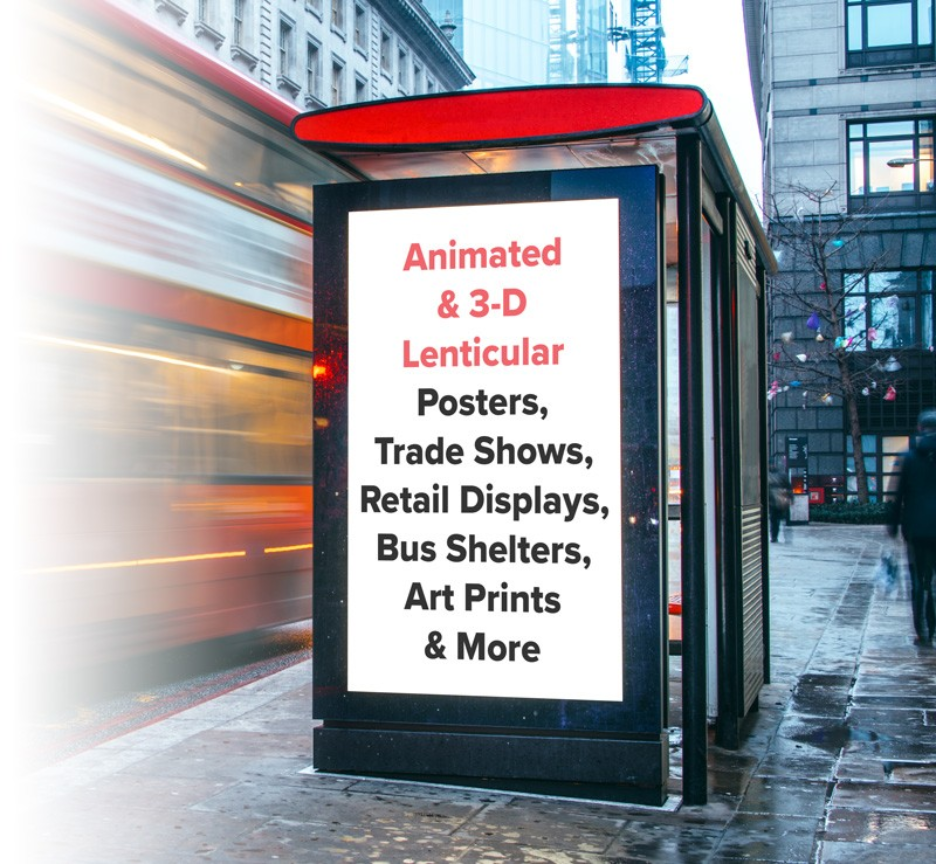
Different materials may be needed for different lenticular applications. Professional printing companies choose materials depending on factors like durability, display area, and customer expectations.
Depending on your project, lightweight materials may be suitable for hanging displays, but rigid panels that hold up to frequent handling or long-term installations may be needed.
The choice of material can vary according to:
- Expected lifespan
- Mounting requirements
- Environmental exposure
- Print size
- Surface durability
The proper selection of lenses and substrates ensures that visuals remain sharp and the display's life is prolonged. Professional printers customize materials for each project's needs.
4. Make Use Of Specialized Printing Equipment
Complex lenticular printing requires a device that can achieve very precise registration from start to finish. Expensive presses will ensure that all pages of a print job are color consistent and in the exact right place, with the images crisp and sharp. This uniformity is particularly crucial with larger screens, where even minor deviations can impact the perceived effect.
Production teams monitor:
- Color accuracy
- Registration tolerance
- Ink consistency
- Print density
- Lens alignment
Routine calibration and equipment maintenance help ensure each project meets demanding production standards while producing crisp animation and 3D effects.
5. Do Intensive Quality Control

Quality assurance doesn't end after printing. All completed work is inspected prior to shipping. Technicians assess image sharpness from various perspectives, check lens alignment, and assess finishing and consistency.
Many also test displays under the lighting conditions that they may be installed in. Some common quality checks are:
- Viewing angle performance
- Color consistency
- Surface finish
- Trim accuracy
- Mounting preparation
- Packaging protection
These inspections help minimize installation problems and safeguard your investment. They also contribute to making certain that each print makes the intended visual impression through the entire print run.
6. Coordinate Complex Finishing And Delivery
Many lenticular projects involve more than printing. Displays may require custom mounting, framing, cutting, lamination, packaging, or direct shipment to multiple locations. Professional production teams coordinate these finishing services so every component arrives ready for installation.
For example, a nationwide retail campaign may involve hundreds of identical displays shipped to separate stores. Careful project management helps maintain consistency while meeting deadlines.
Experienced providers also communicate throughout production, allowing you to monitor progress and address adjustments before final delivery. This organized coordination minimizes delays, simplifies installation, and helps complex projects stay on schedule from start to finish.
Final Thoughts
Professional lenticular printing involves much more than producing eye-catching visuals. Every successful project depends on careful planning, accurate artwork preparation, appropriate material selection, advanced printing technology, and thorough quality control.
Experienced production teams understand how these elements work together to create displays that deliver smooth visual effects and dependable performance.
Whether you're developing retail graphics, exhibition displays, promotional signage, or architectural installations, partnering with skilled specialists helps reduce production risks and improve results.
Before starting your next project, discuss your objectives, viewing environment, and design requirements with an experienced provider so every detail is addressed before production begins for a polished, reliable, and visually impressive finished display every time.
839GYLCCC1992



Leave a Reply