

Inside Licensed Peptides: A Look at the Brand’s Quality Standards, Testing, and Research Support
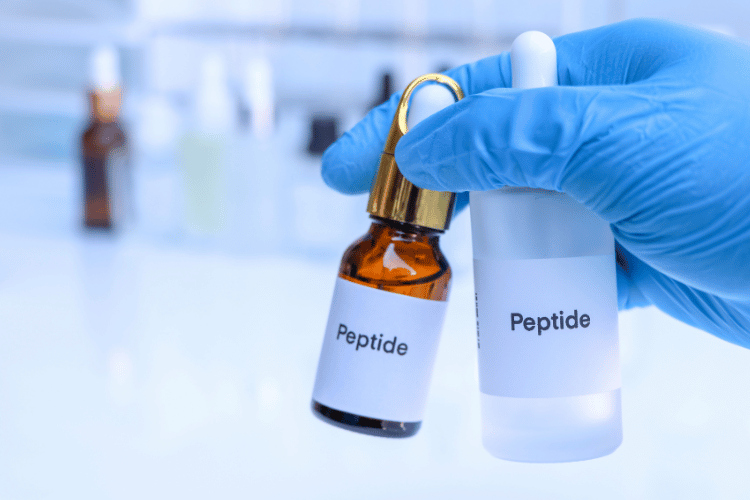 [Photo by Kittisak Kaewchalun from Getty Images via Canva.]
Peptide science has attracted growing attention from laboratories, biotechnology companies, and academic institutions during the past two decades. Reviews of peptide drug development indicate that more than 30 peptide-based medicines have reached global markets since 2000, reflecting advances in synthesis methods and formulation strategies. At the same time, researchers continue to investigate experimental compounds that have not progressed to human studies.
Within this environment, Licensed Peptides operates as a supplier of research-grade peptides intended solely for laboratory, analytical, and preclinical applications. The company, based in Boca Raton, presents itself as a source of documented compounds for investigators seeking analytical transparency, batch traceability, and educational material related to peptide research.
Testing Standards Intended to Support Reproducible Research
Licensed Peptides states that its catalog is manufactured for research use only and is not designed for human consumption, clinical treatment, or diagnostic procedures. This distinction remains important as interest in peptides expands beyond scientific settings.
Medical experts have repeatedly warned against self-experimentation with unregulated substances. For instance:
- Dr. Céline Gounder, editor-at-large for public health at KFF Health News, noted that purchasing research peptides for personal use means volunteering to become a human experiment.
- Dr. Andrew Huberman, professor of neurobiology at Stanford, has publicly questioned unsupervised peptide experimentation, asking who is conducting studies at home and warning that biological processes could go awry, potentially leading to serious unintended consequences for inexperienced individuals without appropriate laboratory oversight today.
To address concerns surrounding product identity and consistency, the company reports that peptides are evaluated using several analytical methods:
- High-performance liquid chromatography testing to assess purity
- Mass spectrometry analysis to confirm molecular identity
- Endotoxin and lipopolysaccharide screening for laboratory applications
- Batch-specific Certificates of Analysis for review and recordkeeping
According to Licensed Peptides, their products are expected to meet purity levels of at least 99 percent. Certificates of Analysis and batch documentation can help investigators compare experiments conducted over extended periods and reduce uncertainty associated with sourcing materials from multiple suppliers.
A Broad Catalog Covering Multiple Research Areas
The peptide sector encompasses a wide range of biological targets. LicensedPeptides offers compounds associated with regenerative biology, metabolism, neuroscience, endocrinology, and immunology.
Its catalog includes tissue repair peptides such as BPC-157, TB-500, GHK-Cu, and Ara-290. Growth hormone secretagogues include CJC-1295, Ipamorelin, Sermorelin, Tesamorelin, IGF-1 LR3, Fragment 176-191, and AOD9604. Neuroactive compounds include Semax, Selank, DSIP, and Pinealon. Additional categories focus on longevity peptides, immune signaling molecules, reproductive hormones, and glucagon-like peptide analogs.
Researchers can also obtain nasal preparations, capsule formulations, and combination products designed to study multiple pathways simultaneously. Examples include blends containing BPC-157 and TB-500 or combinations incorporating GHK-Cu and KPV.
Scientific interest in peptide biology continues to expand. Reviews published in Nature Reviews Drug Discovery and Signal Transduction and Targeted Therapy describe improvements in peptide stability and delivery technologies that have broadened investigative possibilities for researchers.
Educational Resources Emphasize Mechanisms Rather Than Outcomes
Licensed Peptides describes its approach as science first. Instead of presenting compounds as therapies, company materials generally focus on mechanisms of action, receptor interactions, and experimental applications.
That distinction reflects concerns raised by physicians and drug development specialists. Dr. Max Rogers, chair of the Alabama Board of Medical Examiners, stated that online marketing can blur the distinction between legitimate medicines and products that have not undergone review by the U.S. Food and Drug Administration (FDA). He added that people may not understand what a substance contains, how it was manufactured, or what risks might accompany its use.
Educational content associated with Licensed Peptides includes preparation guidance, peptide handling information, and reconstitution tools intended to support experimental consistency. Researchers studying signaling pathways often seek practical references that explain laboratory procedures without extending into medical claims.
Published studies demonstrate why careful interpretation remains necessary. Animal investigations summarized by Sikiric and colleagues reported that BPC-157 showed promise in tissue repair, inflammation modulation, and vascular responses. However, human evidence remains limited.
Conclusion
Licensed Peptides occupies a niche within the research supply market by concentrating on documentation, analytical verification, and educational support. The company presents peptides as laboratory tools rather than consumer products and maintains messaging centered on experimental investigation.
Experts continue to caution against using research materials outside regulated settings, and evidence for many compounds remains confined to cell studies and animal models. Nevertheless, demand for well-characterized peptides persists as scientists investigate metabolism, regeneration, immune signaling, and neurobiology. In that setting, transparency regarding purity standards, testing practices, and batch traceability may remain an important consideration for laboratories seeking reproducible results.
References
- Muttenthaler, M., King, G. F., Adams, D. J., & Alewood, P. F. (2021). Trends in peptide drug discovery. Nature reviews Drug discovery, 20(4), 309-325.
- Wang, L., Wang, N., Zhang, W., Cheng, X., Yan, Z., Shao, G., … & Fu, C. (2022). Therapeutic peptides: current applications and future directions. Signal Transduction and Targeted Therapy, 7(1), 48.
839GYLCCC1992

Leave a Reply