

Turtle Pictures
I had pet turtles as a kid. I think I still like them although I don't have them as pets any more. The biggest obstacle to having turtles for pets is that they live a long time. And if given enough room, they can grow to be quite large.
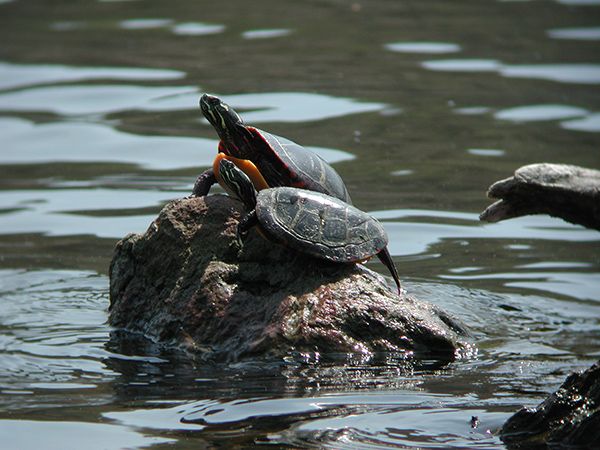
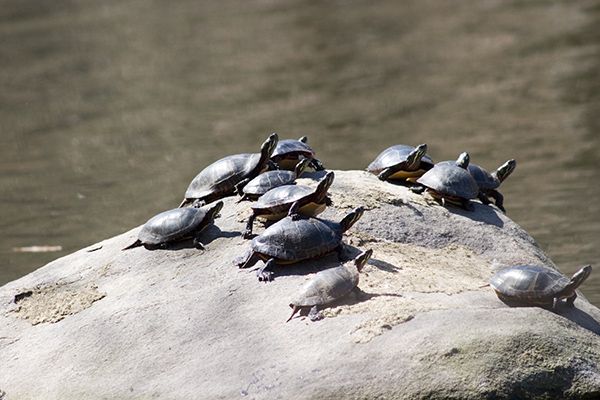
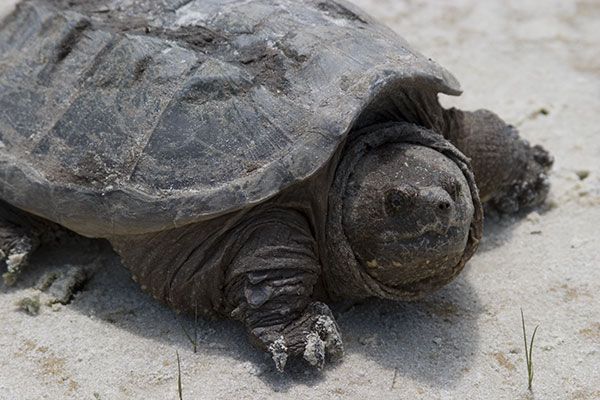
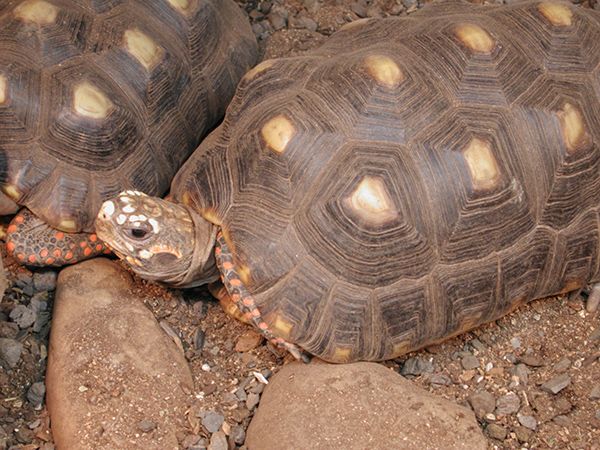
Nowadays, I have to settle for taking pictures of turtles. I usually find them in small groups on rocks basking in the sun. But they're kind of jumpy and more often than not dive in to the water as I approach. My zoom lens came in handy for the following pictures. The first two shots were taken in Rockefeller State Park. I hid behind some large rocks while simultaneously steadying the zoom lens on the rocks.

The NY Times wrote a wonderful article on turtles recently. Here are some of the interesting facts I gleaned from the article.
- Some turtles can go without food and water for months at a time.
- The strongest of turtle shells can withstand the impact of stampeding wildebeests.
- Turtle are live longer than any other creature on this planet surviving for centuries in some cases. Don't believe it? Check out these two recent news stories:
- In March 2006, a giant tortoise named Adwaita died in a Calcutta zoo after reportedly living for 250 years old.
- Shortly after in June 2006 Harriet, a tortoise from the Galapagos, died in the Australia Zoo at age 176.
- Researchers have recently been surprised to discover that unlike every other animal studied, a turtle's organs do not gradually break down or become less efficient over time.
- According to Dr. Raxworthy, “If turtles didn't get eaten, crushed by an automobile or fall prey to a disease they might just live indefinitely.”
- The history of turtles and tortoises extends back 230 million years or more. They might even predating other reptiles such as snakes, crocodiles, and even the dinosaurs.
- Box turtles and some others that live in forests can determine the location of a lake or other body of water a mile away. It's possible they do this by detecting polarized light reflecting off of the surface of the water.
- Female sea turtles migrate across entire oceans every breeding season and without fail find their way right back to the beach where they were born to lay their own eggs.

 (1 votes, average: 4.00 out of 5)
 Loading...
You are a fabulous photographer and I really like your site. It'is an inspiration!